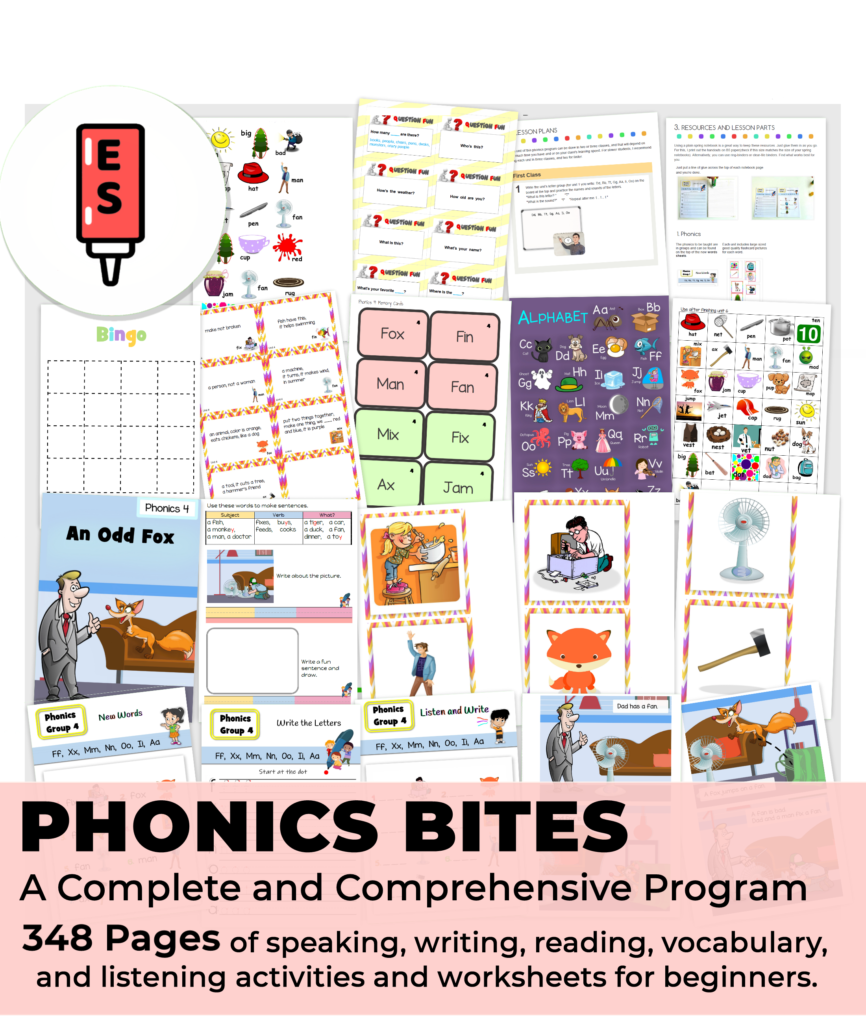



This Phonics Listen and Write Worksheet (Bite 21) is a specialized resource designed to help young learners master the common English diphthongs “oi” and “oy”. By focusing on these specific vowel sounds, students practice “encoding”—the vital literacy skill of hearing a sound and translating it into a written word.
This worksheet focuses on the diphthongs oi and oy, along with a supporting letter bank of c, n, s, e, l, v, t, b, and j. Students observe the clear visual prompts—such as coins, oil, and a boy—and use the provided letters to spell out the corresponding words. This structured approach is perfect for transitionary readers who are moving beyond simple CVC words into more complex vowel patterns.
Perfect for:
- Kindergarten & Primary School: Enhancing early literacy and phonics curricula.
- ESL / EFL Beginner Classes: Building foundational vocabulary and spelling skills for non-native speakers.
- Listening and Spelling Practice: Improving the connection between spoken English and written diphthong patterns.
- Classroom Literacy Centers: An excellent activity for independent work or guided small groups.
- Early Literacy Development: Helping children recognize and differentiate between similar-sounding diphthongs.
Skills Practiced:
- Phonics and Sound Recognition: Identifying the subtle differences between the “oi” and “oy” sounds.
- Listening Comprehension: Accurately identifying words spoken by a teacher, parent, or audio track.
- Vocabulary Development: Learning and reinforcing common words like coins, noise, oil, voice, toys, and boy.
- Spelling and Writing Practice: Strengthening correct spelling patterns for complex vowel teams.
- Letter–Sound Connections: Matching the correct diphthong and consonants to the heard sound.