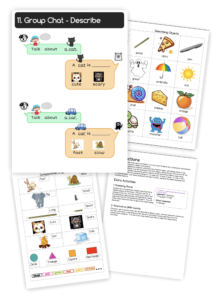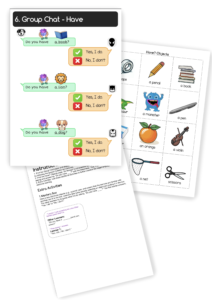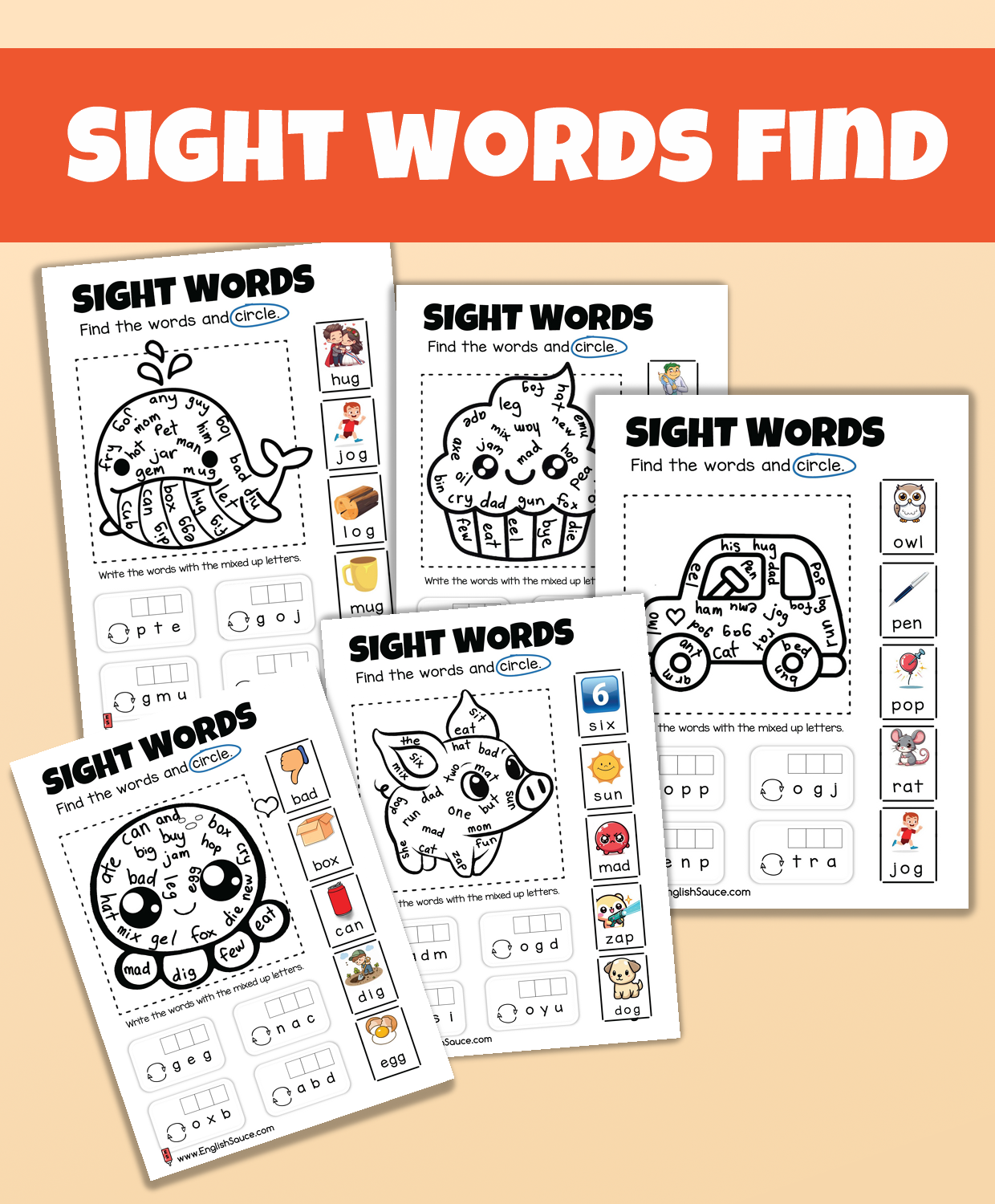


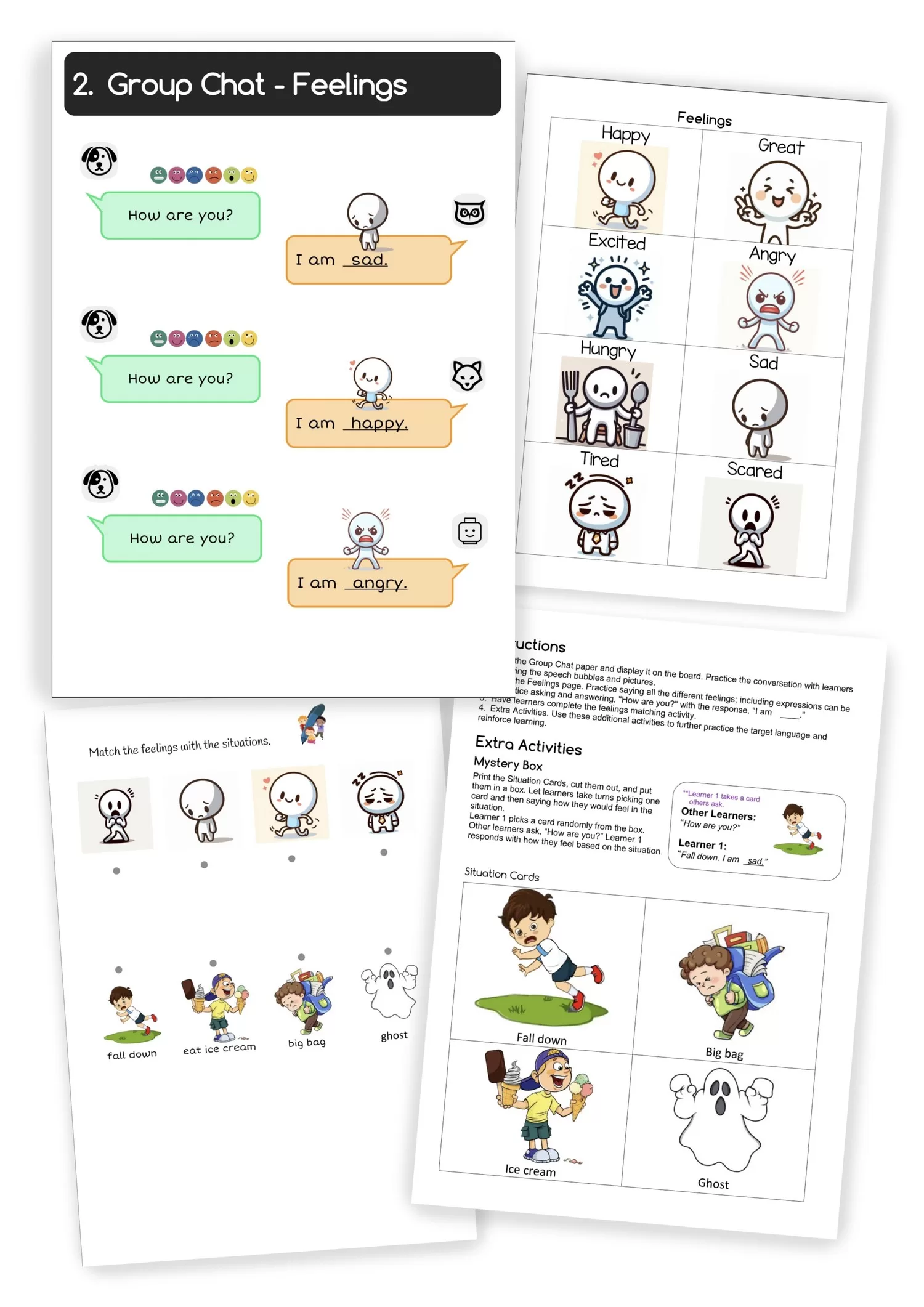
This social-emotional learning (SEL) and language-building bundle helps beginners and English language learners (ELLs) identify, express, and understand emotions through interactive dialogue and contextual activities.
Activity Overview
This comprehensive set guides students through the process of connecting feelings to words and real-world situations:
- Group Chat Dialogue: Students practice a structured conversation using the “How are you?” prompt. Through scaffolded sentence starters (“I am ___”), learners gain confidence in expressing their own emotional state while practicing basic grammar.
- Feelings Vocabulary Grid: A visual guide featuring expressive characters for eight core emotions: Happy, Great, Excited, Angry, Hungry, Sad, Tired, and Scared. This builds emotional literacy by pairing clear visual cues with the written word.
- Contextual Matching: This worksheet challenges learners to match feelings with specific scenarios, such as feeling “sad” after falling down or “scared” by a ghost. This helps students understand the why behind different emotions.
- Mystery Box & Situation Cards: An interactive speaking game where students pull a card (e.g., “Big bag”) and must respond with the appropriate feeling (“I am tired”), encouraging spontaneous speech and situational awareness.
Why It Works
By moving beyond simple rote memorization, this printable encourages functional communication. It uses relatable illustrations to bridge the gap between internal feelings and external vocabulary, making it an excellent resource for building empathy and self-regulation alongside language skills.
Perfect for:
- ESL / EFL newcomer and beginner students
- Kindergarten and early elementary SEL lessons
- Special education and speech therapy sessions
- Homeschool morning meetings
- Small group social skills instruction
Skills Practiced:
- Verbal Communication: Asking and answering “How are you?”
- Emotional Literacy: Correcting identifying and naming feelings.
- Reading Comprehension: Matching text to visual situational context.
- Social Interaction: Engaging in role-play and “mystery” activities with peers.
- Critical Thinking: Linking cause (situation) to effect (emotion).
This bundle is an essential tool for creating an inclusive classroom environment where young readers and English learners feel empowered to share their voices.