Description
A set of five bright, kid-friendly grammar posters that turn the five core English sentence patterns into a visual formula your students can see, read, and copy. Each poster pairs a time concept with its structure, so learners stop memorizing abstract tense names and start building sentences instead.
The five posters cover:
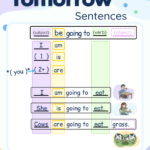
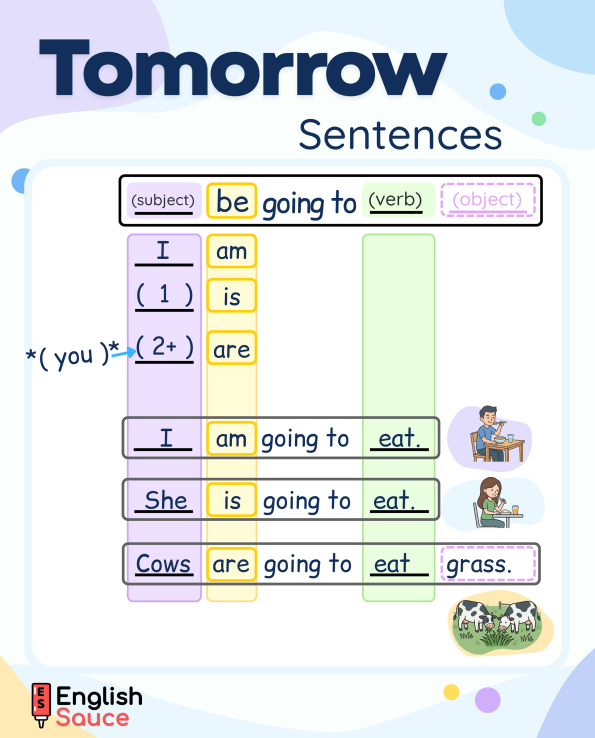
- Tomorrow — be going to (future): (subject) + be going to + (verb) + (object)
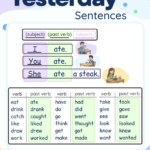
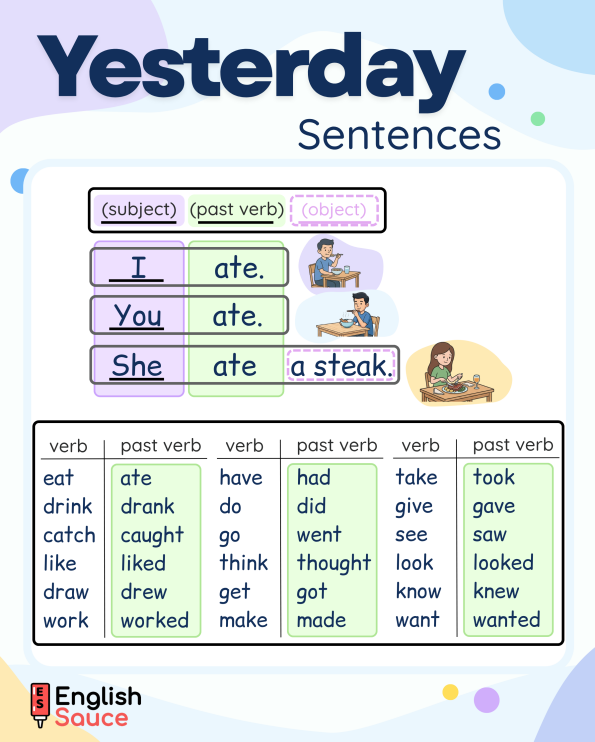
- Yesterday — simple past: (subject) + (past verb) + (object)
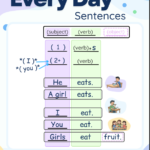
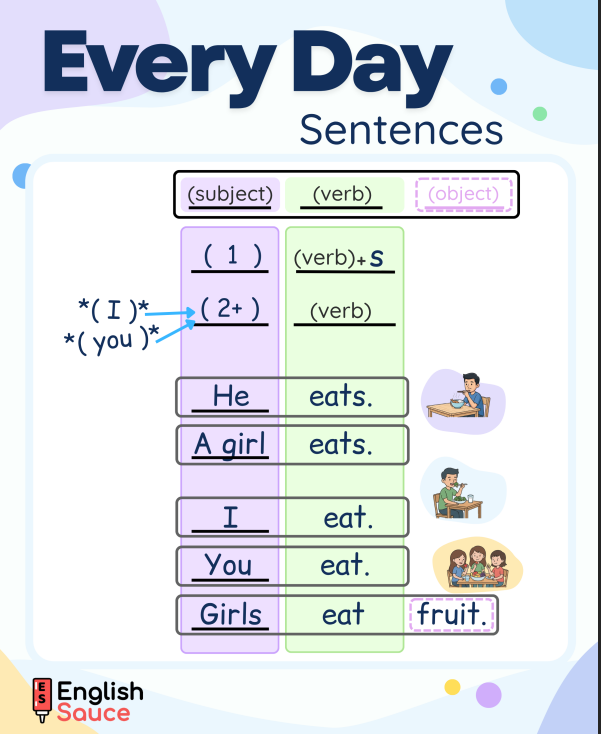
- Every Day — simple present: (subject) + (verb) + (object), with clear third-person -s rules
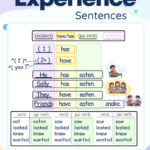
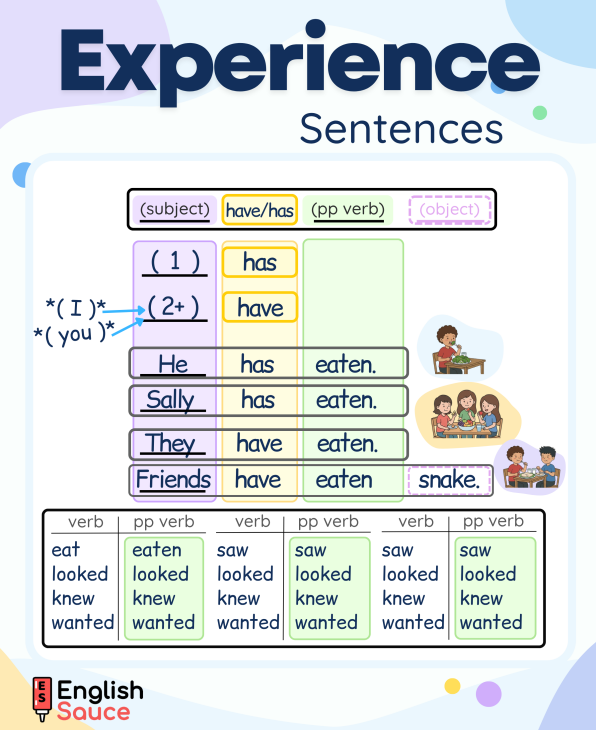
- Experience — present perfect: (subject) + have/has + (pp verb) + (object)
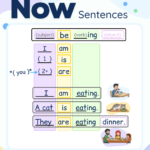
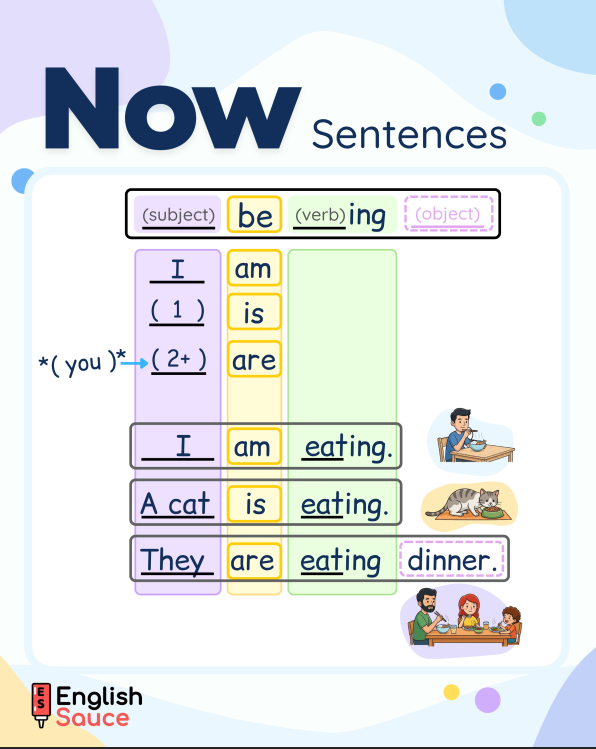
- Now — present continuous: (subject) + be + (verb)ing + (object)
Every poster follows the same visual system: color-coded boxes for subject, verb, and object; example sentences with matching illustrations; and handy verb tables (past forms, past participles) built right in. Special subject pronouns (I, you, he/she/it, they) are mapped to their correct be and have forms, so students can self-check at a glance.
How to Use These Posters in Your Classroom
- Classroom Anchor Charts: Print in large format (A3 / Poster size) and display them sequentially on your grammar bulletin board for quick reference during reading and writing sessions.
- These posters can be used as a visual guide during picture-description activities. Show students a picture of people doing different things and have them describe what they see using the sentence patterns on the posters. Students can practice using different tenses to describe the same picture in different ways—for example, saying what people are doing now, what they do every day, what they did yesterday, what they are going to do tomorrow, or what they have experienced.
- Interactive Sentence Building: Have students write original sentences on mini-whiteboards using the poster formulas as a step-by-step checklist.
- ESL / EFL Visual Support: Use during small-group guided speaking or writing practice to scaffold correct tense usage without pausing to explain complex terminology.
- Self-Correction Tool: Train students to refer to the posters when editing their own work—for instance, checking whether a single subject (1) in an “Every day” sentence needs an -s on the verb.
- Student Notebook Inserts: Print mini versions (4 per sheet or laminate standard A4 size) to store in student writing folders or desk mats.


Reviews
There are no reviews yet.