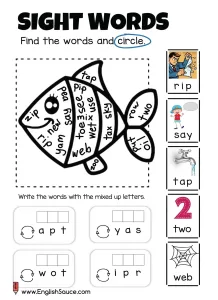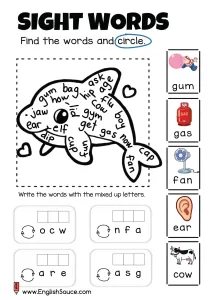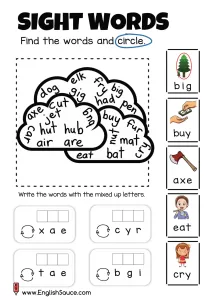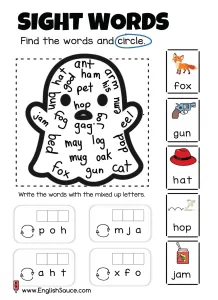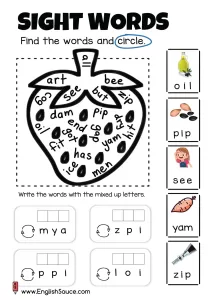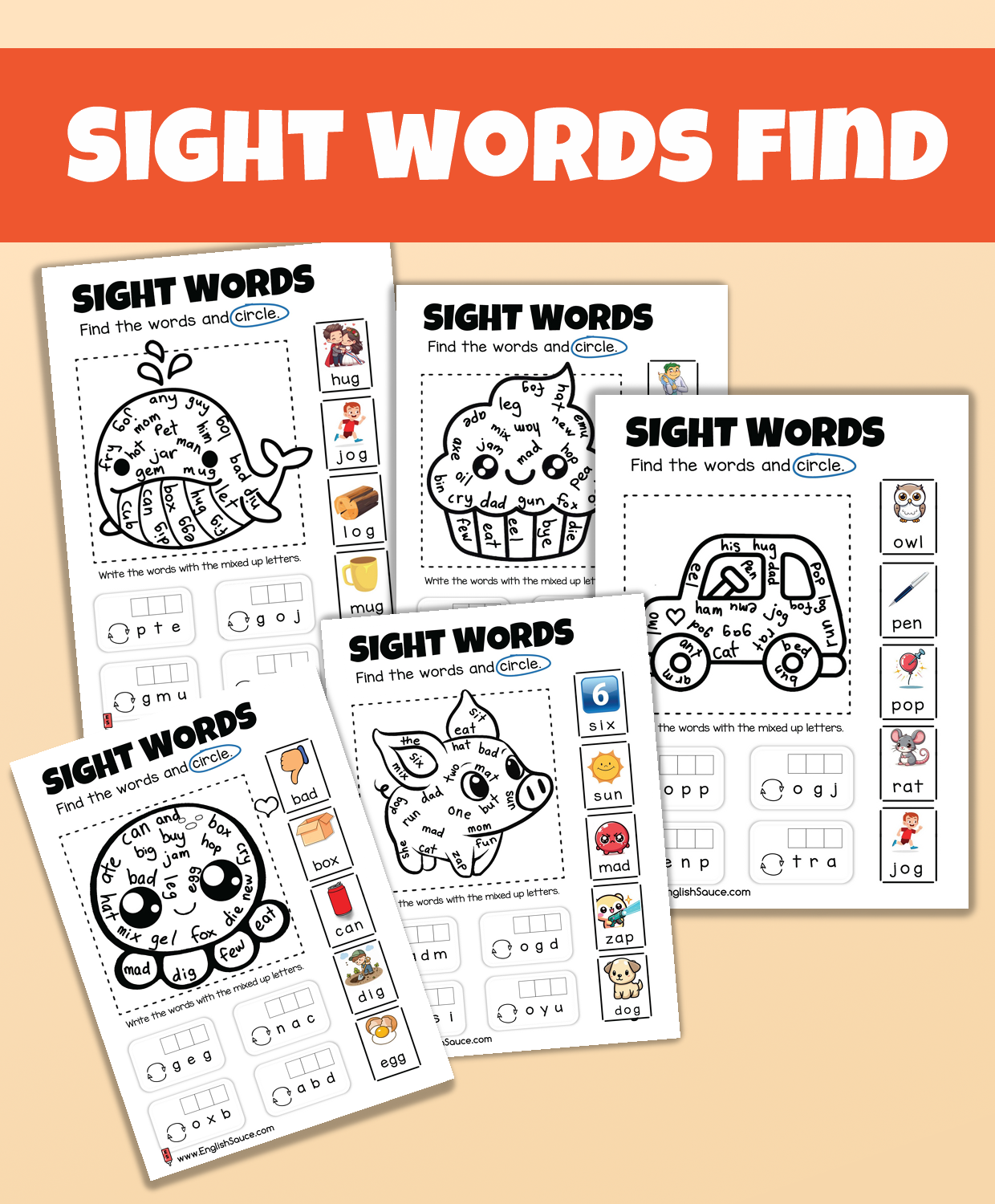


This flower-themed worksheet helps learners practice recognizing common high-frequency words while building foundational phonics skills through an engaging, visual search and spell activity.
Activity Overview
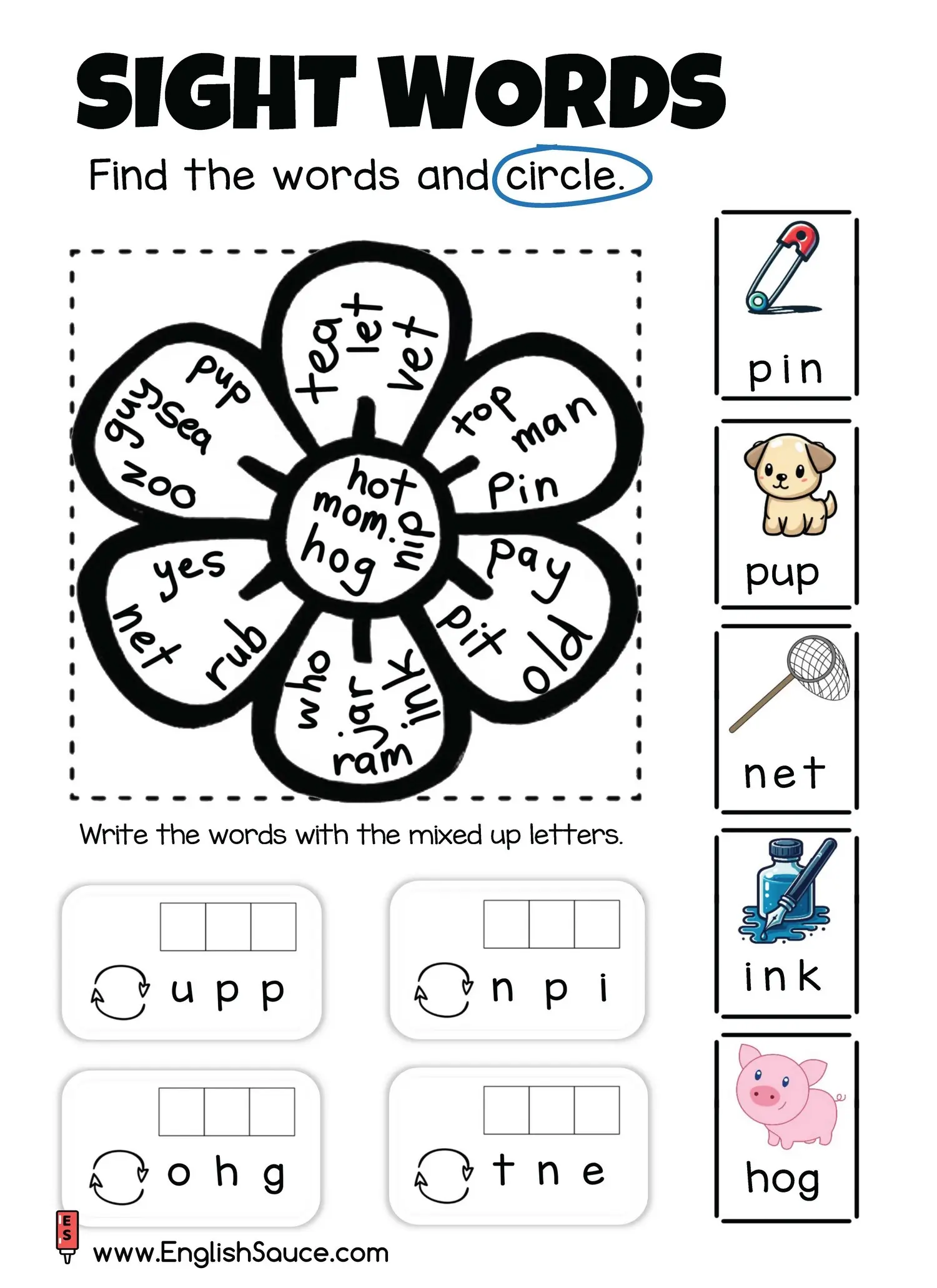
Students begin by searching for and circling target words hidden inside the petals and center of a flower illustration. The activity encourages learners to scan the design carefully to find the focus words: pin, pup, net, ink, and hog. This word search strengthens visual word recognition, attention to detail, and early reading confidence.
The flower also includes a variety of other simple CVC (consonant–vowel–consonant) and high-frequency words—such as tea, vet, hot, and man—mixed throughout the petals. These provide extra practice decoding basic phonetic patterns while helping students distinguish the specific target vocabulary from other words.
In the second activity, students unscramble mixed-up letters to write the correct words in the boxes provided. This reinforces spelling, phonics awareness, and correct letter order, giving learners another opportunity to practice reading and writing.
Why It Works
The bright, flower-themed design makes learning interactive and enjoyable while supporting important early literacy development. This worksheet supports Science of Reading–aligned instruction by combining phonics decoding, sight word recognition, and spelling practice in a simple, clear format.
Perfect for:
- Kindergarten sight word practice
- ESL / EFL beginner English classes
- Early phonics and reading lessons
- Literacy centers and small group instruction
- Spring or nature-themed classroom activities
Skills Practiced:
- Recognizing high-frequency words: Identifying common words by sight.
- Reading simple CVC words: Decoding basic phonetic structures.
- Visual scanning: Improving focus and word identification.
- Unscrambling and spelling: Building letter-order awareness and fine motor writing skills.
- Vocabulary building: Connecting words to their visual representations (e.g., a safety pin, a puppy, a fishing net).
This is a great resource for phonics lessons, literacy centers, and independent learning activities for young readers.